
A lawn can look hungry when the real problem is under your feet. Compacted soil leaves less space for water, air and roots to move through. Turf may thin out or struggle even when your mowing and watering seem reasonable.
Spring can be a good time to address compaction in a warm-season lawn, once it is growing actively. The first step is to check whether compaction is actually the problem.
First, check whether the soil is compacted
Hard ground is a clue, but it is not proof. Very dry soil can also resist a fork or screwdriver.
Look for a combination of signs:
thin turf where people regularly walk;
water running off or ponding after rain or irrigation;
worn traffic areas that do not recover despite otherwise reasonable care;
noticeably hard soil beneath those worn areas.
Push a long screwdriver or smooth metal rod into a few parts of the lawn. Strong resistance may suggest compaction, but compare it with a healthy area and remember that dry soil can feel hard too. If you are unsure, dig a small inspection hole. A dense layer and roots that turn sideways rather than growing down provide stronger evidence.
Time the job for recovery
Aeration disturbs the root zone, so the grass needs enough growth to recover. Buffalo, couch and kikuyu lawns generally recover best when they are actively growing. The start of that period varies across Australia: a lawn in Queensland may be growing strongly while the same grass in a cooler southern area is still coming out of winter.
Watch the lawn rather than the calendar. Fresh leaf growth and an increasing need to mow are useful signs that growth has picked up. Wait if the turf is under severe heat or drought stress.
The soil should be moist enough for the tool to penetrate cleanly, but not saturated. Working waterlogged soil can smear and compress it, making the problem worse. If the ground is bone dry, wait for rain or water it beforehand and allow the surface to settle before starting.
Choose a tool that fits the problem
Manual aerator or garden fork
For a small lawn or a localised traffic patch, a manual hollow-tine aerator may be enough. Work in an orderly pattern over the affected area instead of repeatedly piercing the same spot.
A garden fork can make holes, but its solid tines do not remove soil. It is a modest option for a small, lightly affected patch rather than the strongest remedy for substantial compaction.
Core aerator
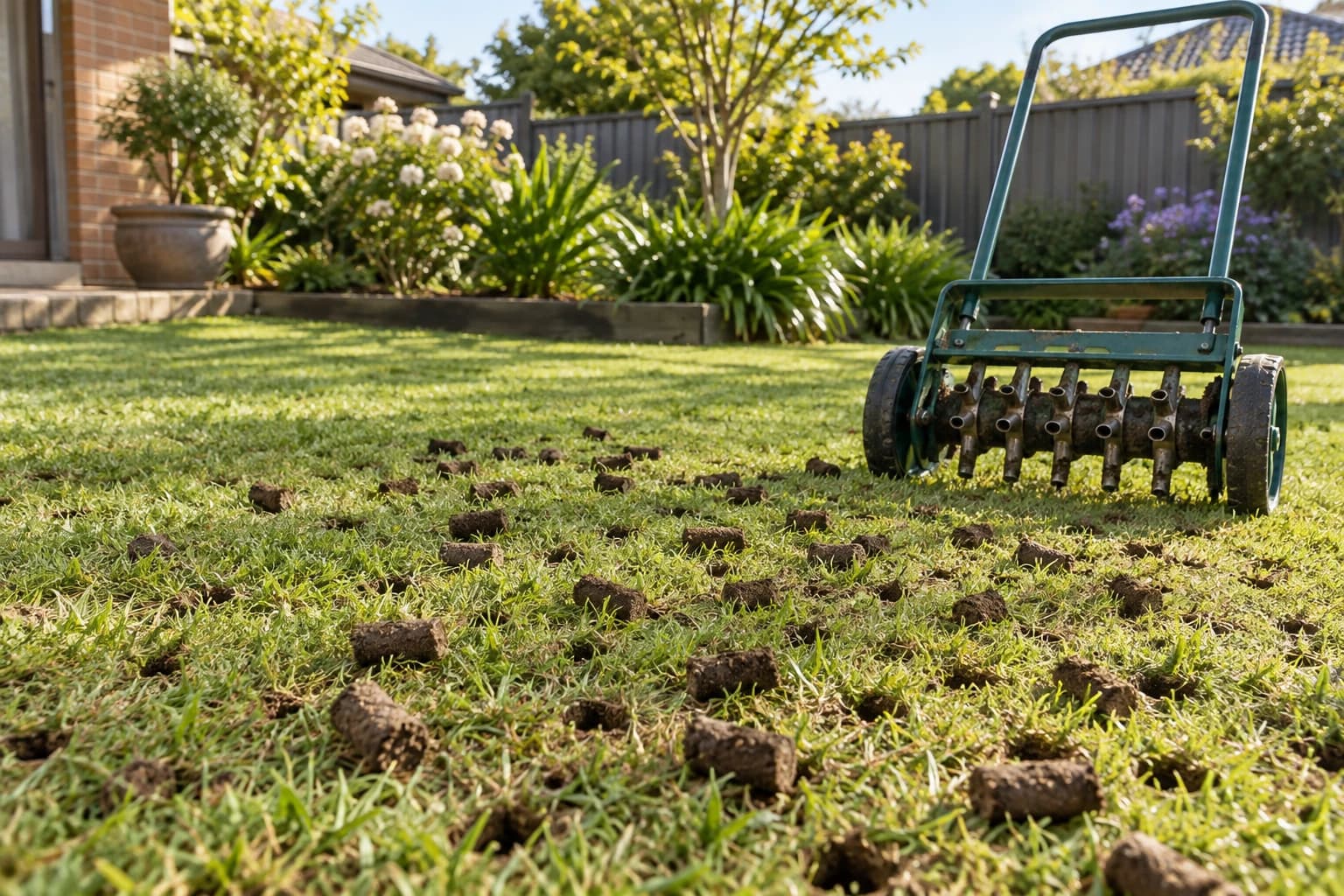
For more significant compaction, core aeration is usually the better choice. Hollow tines remove small plugs of soil, leaving space within the profile. A manual tool may suit a small area; a powered core aerator can cover a larger lawn, though it is heavy and should be used according to the hire company’s instructions.
Before any deeper or powered aeration, locate shallow irrigation, lighting cables and other buried services. If you do not know where they are, check before using the machine.
Spike aerator
A spike tool can open temporary channels near the surface. Because its solid tines push soil aside rather than removing a core, it is less direct for a confirmed, serious compaction problem. Match the tool to what you found in the soil, not just what is available to hire.
Aerate without overworking the lawn
Check the turf. Wait for active growth and avoid periods of serious drought, heat or other stress.
Check soil moisture. Aim for soil that penetrates cleanly, without sticking or smearing. Avoid waterlogged ground.
Mark the problem areas. Focus on traffic routes, play areas and other patches where compaction is evident.
Work methodically. Cover the target area with the appropriate tool. Follow the machine instructions if using powered equipment.
Let the turf recover. Resume normal mowing and adjust watering to the weather and soil moisture. There is no need to add every renovation treatment at once.
The small cores left on the lawn can usually dry and break down naturally. Keep an eye on the aerated area over the following weeks: improved growth takes time and depends on the underlying cause being addressed.
Do you need fertiliser or topdressing afterwards?
Not automatically. Professional turf renovations often combine aeration with other treatments, but a home lawn does not necessarily need them all.
If the lawn has a genuine nutritional need and is actively growing, a suitable fertiliser may help support recovery. Follow the product’s current label. Topdressing can be useful for a specific levelling or soil-profile goal, but unsuitable material may create another problem. Choose each extra step for a clear reason.
Aeration will not fix every drainage problem
Persistent ponding may reflect poor levels, an underlying soil layer, a drainage fault or overwatering. If water still sits on the surface after the compacted area has been addressed, investigate those possibilities instead of repeatedly aerating.
Thin turf can also result from shade, mowing stress, pests, disease or an unsuitable grass type. A Greenkeeper looks for the cause before choosing a treatment.
The takeaway
Aerate when you have evidence of compaction and the lawn is growing well enough to recover. Avoid saturated soil, choose a tool suited to the affected area and give the turf time afterwards. The goal is a healthier soil environment for water, air and roots—not simply more holes in the lawn.