
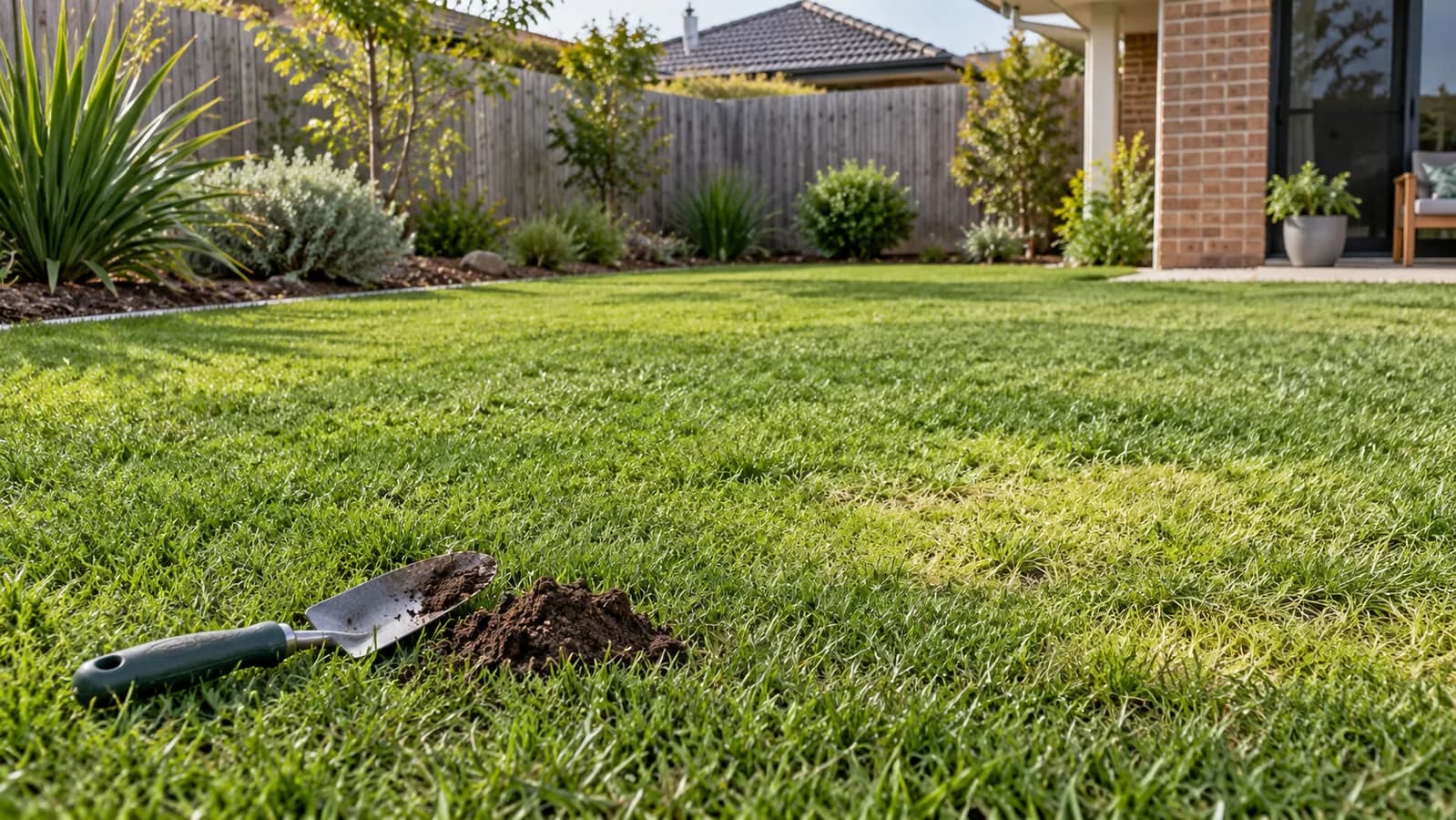
The first warm days can make a bag of lawn fertiliser look like the answer to every tired patch. Sometimes a feed is useful. Just as often, the better first move is to check what the grass is doing and why it looks the way it does.
I would make five checks before opening the bag. They take less effort than fixing an unnecessary application, and they work whether your lawn is buffalo, couch, kikuyu or something less common.
1. Is the lawn growing strongly enough to use a feed?
Look for fresh leaf and a steady return to mowing. Buffalo, couch and kikuyu are warm-season grasses; their growth picks up as local conditions warm, but that point does not arrive on the same date in Brisbane, Hobart and Perth. A lawn that is still barely moving after winter is a poor candidate for a generous spring feed. Wait for active growth rather than treating the calendar as an instruction.
Cool-season lawns, including some fescue and ryegrass lawns in cooler districts, follow a different growth pattern. Identify the grass before borrowing a neighbour’s routine. Even within one turf type, shade, soil and water can change how quickly different parts of a yard respond.
2. Is the pale patch really a nutrition problem?
A light colour is a clue, not a diagnosis. Walk the lawn and compare the affected patch with a healthier area. Is it beside a path where feet have compacted the soil? Does water sit there, or does the ground stay dry while the rest of the lawn takes up moisture? Has a tree made the patch noticeably shadier? Check whether the grass is thin, simply slow to green up, or actually dying back.
Fertiliser cannot create sunlight, fix poor drainage or loosen a compacted root zone. Yellowing can also have several causes, so resist naming a deficiency from colour alone. If one small area is struggling while the rest is growing normally, investigate that area before treating the whole yard. Give the lawn basic mowing and watering conditions it can respond to, then reassess.
3. What do you know about the soil?
If growth has been disappointing for more than a season, or you are considering repeated feeds to chase colour, a laboratory soil test can be more useful than another guess. Ask a local testing service for sampling instructions suited to turf and keep visibly different areas separate. A representative sample is made from several spots, not one scoop from the worst patch.
A test can help show whether pH or particular nutrients need attention. It does not automatically prove that every yellow leaf is a nutrient deficiency, and it is not a licence to apply every element on the report. Tell the laboratory about any recent fertiliser or lime application; recent treatment can affect how useful a sample is. Use locally relevant interpretation, especially before adding phosphorus or trying to change pH.
4. What have you already applied, and what is in the shed?
Read the label on the product you actually own. Check that it is intended for your lawn and situation, what nutrients it contains, and its directions for application and watering. A product described as slow release may continue supplying nutrients after the lawn has lost its initial flush of colour. An extra feed made from memory can overlap with the previous one.
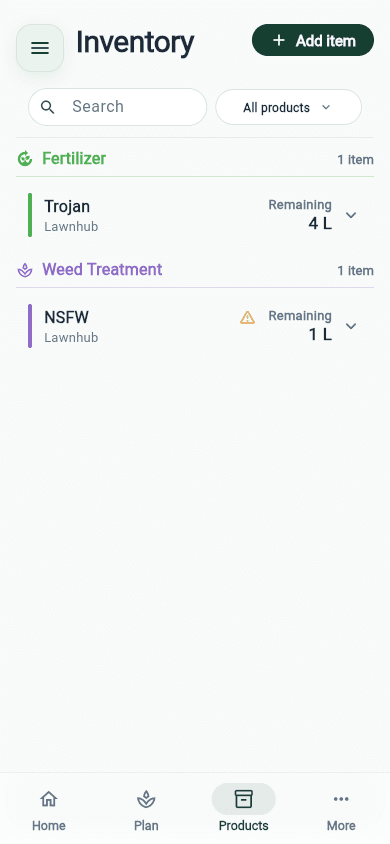
Before buying more, find the date and product from your last treatment. A note on the bag or in a notebook is enough. If you use LawnNova, its product inventory can help you check what you have on hand; keep your own application record alongside that decision. The point is to know what went down before you decide what comes next.
5. Will the weather and site keep nutrients on the lawn?
Postpone feeding if the lawn is drought-stressed, dormant or sitting in waterlogged soil. Also look at the forecast and the slope of the block. A heavy downpour can carry product off the turf, especially from hard surfaces and areas draining towards a street or waterway. Sweep stray granules from paths back onto the lawn and follow the product label’s watering directions. Do not rely on a storm to water a fertiliser in.
Local water restrictions matter too. If the label calls for watering that you cannot provide lawfully or practically, wait for a suitable window rather than leaving product on the surface. In a wet spell, let the ground drain before walking a spreader over it.
If the answer is yes, keep the job measured
For an established lawn that is actively growing, appears to need feeding and has a suitable weather window, choose a product labelled for that turf and follow its current directions. Measure the area rather than guessing the amount from the size of the bag. Spread evenly, avoid garden beds and paving, and record the product and date. More is not a shortcut to a better lawn; excess fertiliser costs money and can leave the site in runoff.
Then give it time. Watch growth and colour over the following weeks, alongside mowing, rainfall and soil moisture. If one patch stays poor while the rest improves, go back to its conditions instead of feeding everything again. A spring feed is one possible tool, not the first answer to every patch of pale grass.