
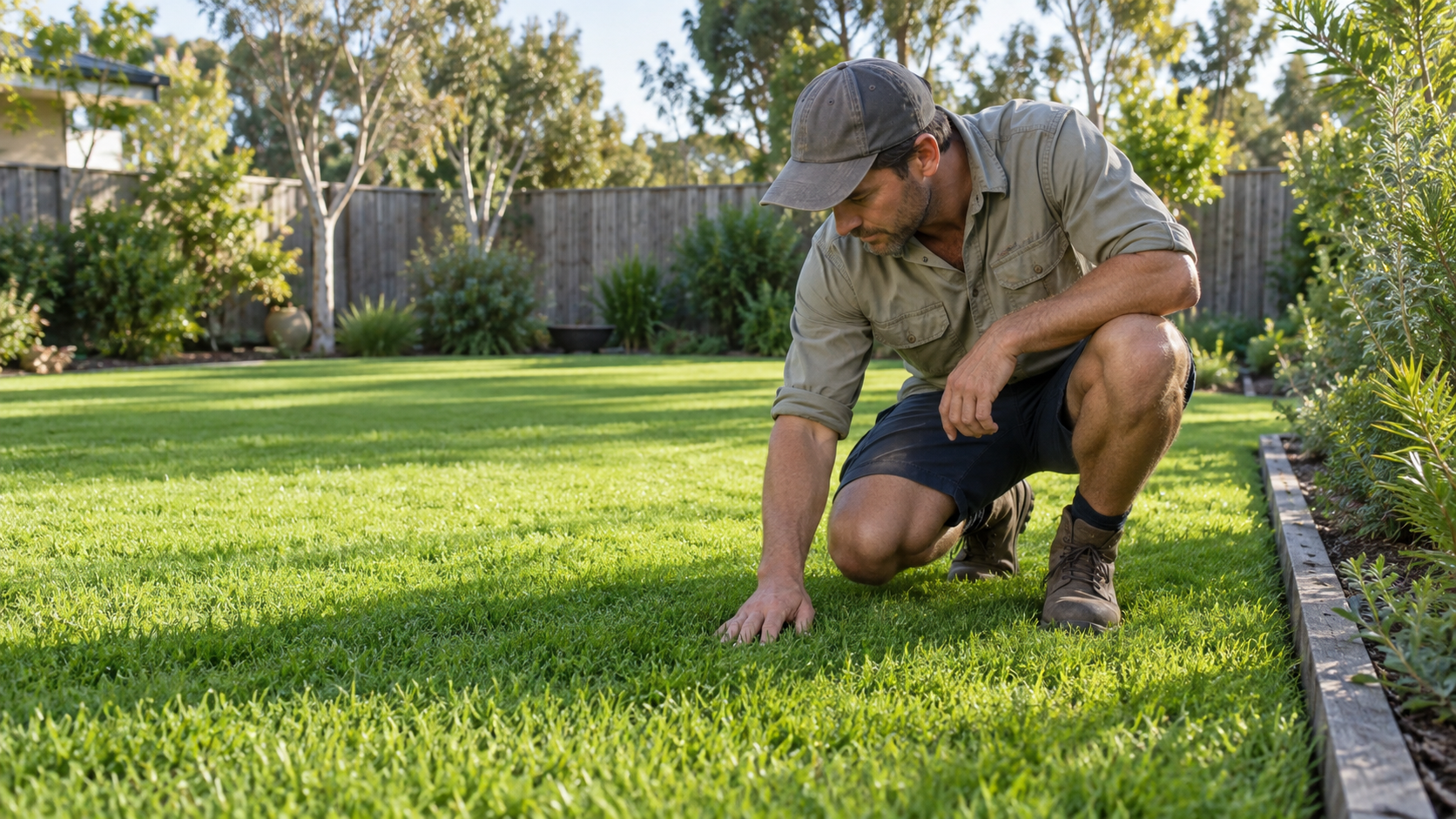
Spring rewards restraint. After winter, the job is not to throw every product at the lawn; it is to read the turf, remove stress and give it steady conditions to respond as soil and air temperatures rise.
Start with an honest look
Walk the lawn before you add anything. Note thin areas, compacted traffic lines, persistent shade, weeds and places that stay wet. These are site conditions to manage, not just cosmetic blemishes.
Mow gently
For the first cuts, keep the mower setting conservative and use a sharp blade. Taking too much leaf in one pass can stress turf that is only just returning to active growth; a measured cut keeps useful leaf area in place.
Clear leaves, sticks and heavy debris so light can reach the grass.
Use a sharp mower blade for a clean cut.
Check rainfall, the soil and the turf before irrigating; avoid a fixed schedule that ignores the week’s conditions.
Make one change at a time
If you feed, improve soil or treat weeds, make a note of the product and date, then give the lawn time to respond. Spacing changes apart makes results easier to judge and avoids piling extra pressure on a recovering surface.
A good spring lawn is built on observation and consistency—not a single miracle treatment.
— Lenny, Greenkeeper