
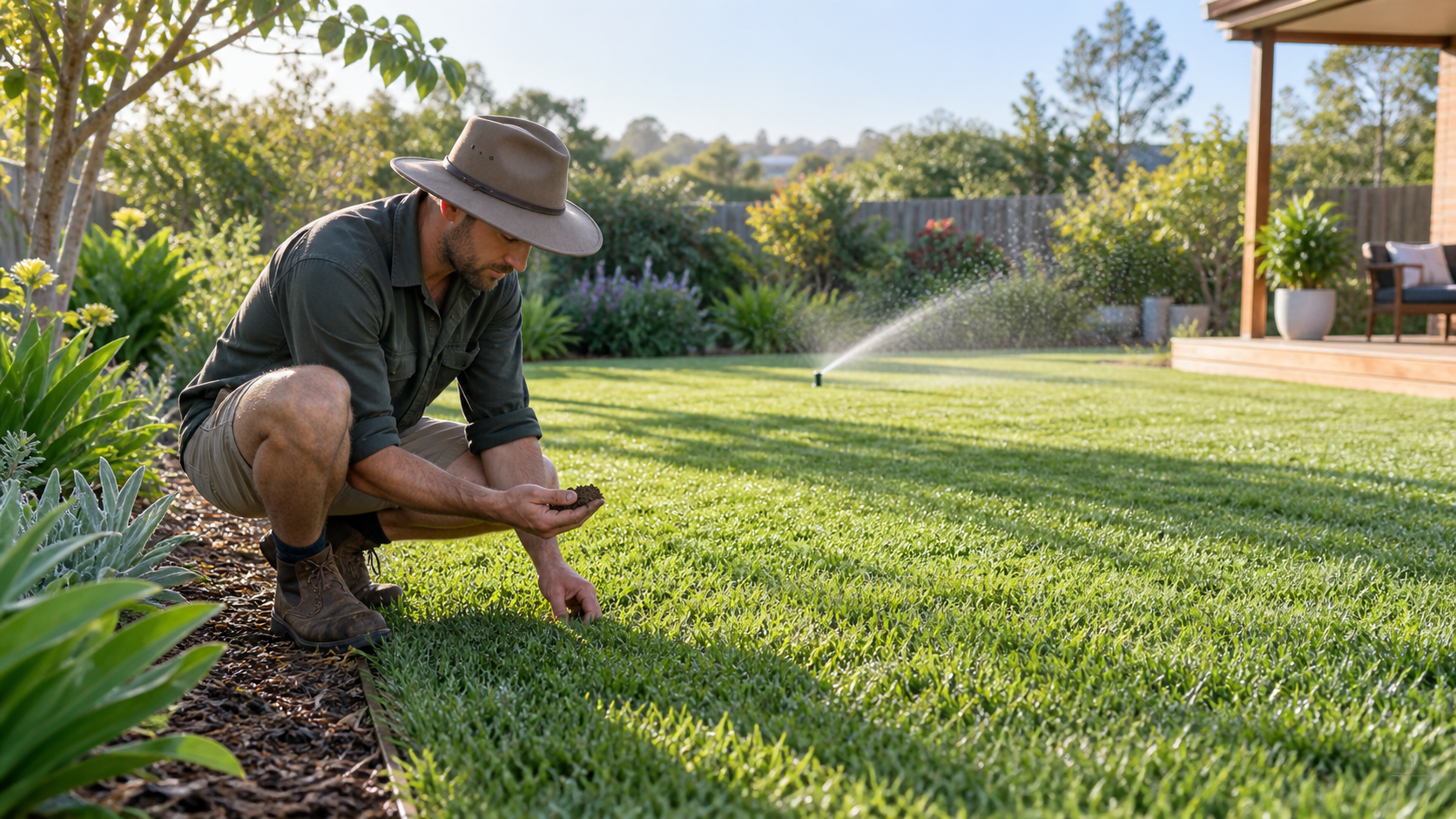
Watering is a response to conditions, not an appointment in the calendar. Rainfall, wind, heat, soil type and shade all change how quickly turf uses water. The lawn and soil should make the call.
Look for the signs
Check several areas before you irrigate, especially sunny edges, turf beside paving and shallow or sandy zones. Look at the grass, feel below the surface and account for recent rainfall rather than relying on one dry-looking patch.
Aim for useful watering, not frequent splashing
When water is needed, apply it evenly and allow time for it to enter the soil rather than simply wetting the leaf. The right amount and timing depend on your grass, soil, weather and local water requirements, so adjust from what you observe.
Check recent rainfall before watering.
Follow your local water restrictions and any instructions for your irrigation system.
Adjust for shade, sandy soil and hot edges rather than treating every area as identical.
Keep a simple record
Keep a simple record of rainfall, irrigation and how the lawn responded. In a few weeks, it will tell you more about your site than a copied schedule ever could. — Lenny, Greenkeeper